
Netanyahu's Nature


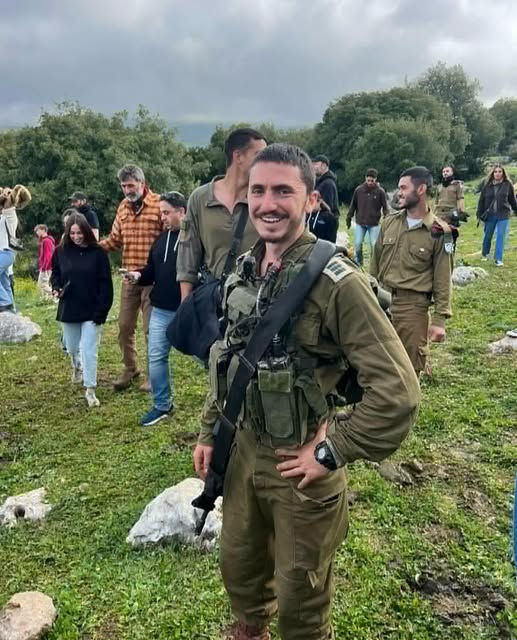
My friend in Israel, whom I call The Nameless One in order to abide by his wish not to be named in print due to his work, offers a perspective shaped by both personal experience and the realities of ongoing war. Though he requests anonymity, his views are proudly and authentically Israeli. He’s witnessed the terror induced by Israel’s geographical neighbors, and his viewpoint is greatly valued by the Leader.
Since Netanyahu is recently rumored to have coerced President Trump nearer to war with Iran until the conflict did in fact transpire, I asked the Nameless One if the sentiment toward Netanyahu has changed in Israel since October 7, hoping to understand more about the beliefs that influence him.
The Nameless One asserts that “Netanyahu only pretends to care about Judaism and the Bible because it serves him politically…” and he adds that deeper motivations are necessary when it comes to questions of land and national security.
At the same time, the Nameless One tells the Leader that there’s a divide within Israeli society itself. “Many secular Israelis prefer not to invoke a religious war although you have to be blind not to recognize it's a holy war from the Muslim perspective.”
In his view, this tension between secular framing and religious reality complicates both domestic understanding and international interpretation of the conflict.
Further, when it comes to considering the idea that Israel may need to annex some of their bordering enemy lands in order to live without the threat of terrorism, I think America may react out of a guilt complex - for the banishment of Native Americans from their own lands, for slavery, for the annexation of Hawaii, for the bombing of Hiroshima and Nagasaki, etc.
Due to this guilt, Americans may not truly consider Israel's lived history, circumstances, and needs. In reacting from their own historical perspective, laden with guilt, Americans may not be able to step outside of themselves and into the perspective of Israelis.
I happened to see a live stream yesterday of the cartel, hiding out in an old white church on the Mexican side of the border (right behind the border wall). Border police said they'd been dealing with the cartel getting people over the border all day for pay, all with blood.
Thus, I find that it's not just about teaching people what's really happening, but about first breaking down what they previously believed.
“The problem starts when demagogues use the justified ignorance of people on these matters,” asserts the Nameless One. “They use ignorance to promote themselves or other agendas.”
The Nameless One takes a firm, yet controversial stance regarding Israel’s enemies. “Look at our fronts,” he says, referencing the terrorism just over their borders; “The only decisive win is taking land and annexing it to Israel.”
He argues that current approaches place too many soldiers at risk without achieving lasting results.
“Bibi simply can't do it because I think that he is against it. We don't need to dismantle Hamas or Hezbollah militarily, putting more and more soldiers in harm's way. We simply need to make our enemies pay the ultimate price - [which is to] take their land.
“Netanyahu is an Oslo agreement politician. He could have canceled it long ago and he never did and never will: Gaza, West Bank, south Lebanon, Syria, Golan, and Hermon mountain…
“Lots of land that we need to officially annex so that our enemies will know that terror has a price and the price is land. If you terrorize Israel you'll pay with your land and you will lose territory.”
“He emphasizes that his argument is not rooted in religion: “I am simply talking about the incentive structure that permits terrorism - we don't force our enemies to pay a price that is actually painful for them.”
In his assessment, traditional measures fail because they do not target what their enemies value most.
“They don't care about human lives and the devastation of their cities (all legitimate targets as we are talking about terror infrastructure, and there are many details to it).
“They do care about losing land, so purely from this perspective we should make them pay a price they actually understand.”
Even then, he acknowledges the limits of such an approach. “Will it make them not terrorists? Probably not, so then they will have to lose more land.”


Comments