
Where the Middle East Stands Today

As Israel and America strategically overcome the military infrastructure and command centers of Iran three weeks into the war, a full scale revolt is expected to begin in Iran as soon as the Isr

aeli and American attack ends.
Iran is an existential danger to Israel, especially because Iranian leaders have made threatening statements while backing terror groups like Hezbollah. The United States has also opposed Iran’s regional influence, seeking to diminish its military reach and prevent nuclear aggression.
Though my friend, the Nameless One admits that he’s not an expert on Iran, he does have an optimal viewpoint from within Israel where he struggles to believe that a western style democracy will emerge from the ruins.
He explains, “The Zoroastrian mentality that rolled into the Shiite Islam dominates Iran and is dualistic in its nature: good versus evil - all the way to the bitter end.”
To unpack his statement, Zoroastrianism was founded by the prophet Zarathustra who is also known as Zoroaster, more than three thousand years ago. A central idea in Zoroastrian belief is the ongoing struggle between good and evil, often understood as a conflict between truth and falsehood.
Zoroastrianism is a long past religion, but it still exists in modern Iran, though its followers make up only a small minority. Communities remain active in places like Yazd and Kerman, maintaining a strong sense of cultural identity. Even with its reduced numbers, the religion has endured by holding onto its original teachings about moral choice, the importance of truth, and the belief that good will ultimately overcome evil.
Further, the Nameless One says, “The suicidal Shiite Islam that we’ve known since the early 80's (which inspired the Sunni Muslim Islam - Al-Qaeda, Palestinian suicide bombers and more) will play a major role in this war. They will not hesitate to burn everything to the ground.”
In Iran, radical Islam is mainly tied to Shia ideology, since Iran is a Shia-majority country and its government is based on a form of political Islam that emerged after 1979. This system is influenced by the ideas of Ruhollah Khomeini, especially the doctrine of rule by Islamic jurists (clerics), which blends religion with political power.
Radical Shia elements in Iran often emphasize strict religious authority, resistance to Western influence, and opposition to countries like the United States and Israel, and this ideology is promoted and protected by institutions such as the Islamic Revolutionary Guard Corps, which plays a major role in politics and regional conflicts.
Radical Sunni Islam isn’t dominant inside Iran and is actually viewed as a threat by the Iranian government, sometimes existing on the margins, often in opposition to the Shia-led state. Overall, Iran’s form of radicalism is primarily Shia and state-centered, while Sunni extremism is more often found outside Iran or in opposition to its government.
Sunnis support elected leadership and Shias believing leadership should stay within his family through Ali ibn Abi Talib.
In modern times, radical Sunni groups like ISIS and Al-Qaeda live according to a strict and violent interpretation of Islamic law, aiming to establish their version of an Islamic state and justifying violence against those they consider enemies, including other Muslims.
On the Shia side, radical elements are typically tied to militant groups like Hezbollah, which combine religious ideology with political and military goals, often aligned with regional powers like Iran.
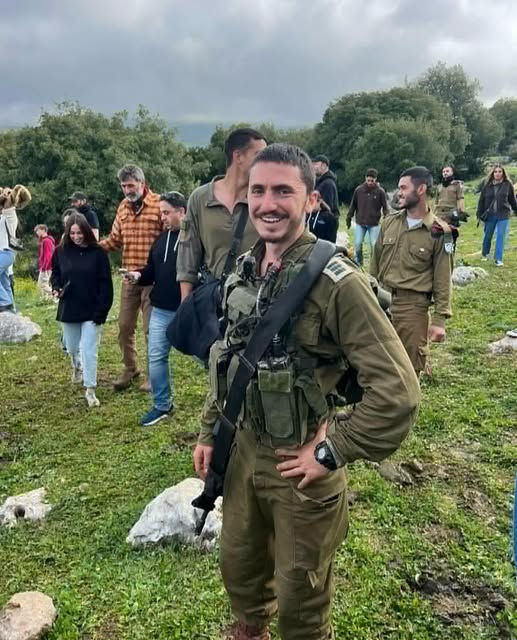
The Nameless One, aka my friend who lives in Israel but would rather not be named publicly, systematically explains the state of each county even more, going front by front:
“Iran - heavily bombed from the sea and air, a limited ground operation will very likely take place soon (probably some key islands and some of the tunnels of the "Missiles cities").
“Lebanon - in late 2024 the pager attack Israel conducted against Hezbollah saved Lebanon from destruction. Now Israel has started a new ground campaign and there is a heavy pressure on the Israeli government by Israelis to permanently take over southern Lebanon and fully annex it to Israel…plus it is the territory of the ancient tribes - Asher and Naftali.
“Gaza and West Bank - boiling Lava - yet Israel isn't interested in dealing with it right now.
“Syria - Julani's Sunni jihadist government is preparing for a massacre of Shiites in Lebanon. Back in the Syrian civil war Hezbollah massacred Sunnis in Syria. After Julani's government massacred the Alawites, the Druze and the Kurds, soon the Shiites of Lebanon will get it (I remind you Julani has been in charge since December 2024).
“Iraq - high probability that the Shiite militias and the pro Iranian Shiite government in Iraq will join the war against Israel and the US, so Iraq that was relatively quiet since October 7th (few drones with explosives) will become a very busy front.
“Egypt is quiet, mainly helping smuggling weapons into Israel to Palestinian terrorists (some peace deal we have there).
“Jordan - intercepts Iranian missiles, a huge front base of America, also their border is used to smuggle weapons to Palestinian terrorists in the West Bank.
“Yemen - the Houthis will soon join the war.
“Meanwhile in Israel - lots of booms from missiles and interceptors and lots of sirens. Kids have no school in most of the country.”
But he says, in true Israeli spirit, “We are doing just fine here.”
On March 21, President Trump issued a warning, giving Iran 48 hours to reopen the Strait of Hormuz and threatening to “obliterate” key Iranian power plants if it does not comply.
In response, Iran warned it could retaliate by targeting U.S. and allied energy infrastructure throughout the Middle East.
U.S. forces are increasing their military presence near the route, while Israel and American forces continue striking Iranian-linked targets and Iran continues missile attacks.
Alongside the military fighting, the conflict is also expanding into cyber and information warfare, with global economic and security risks.
On Monday, Trump walked back his previous threat.


Comments